Scaling and Root Planing
The foundation of periodontal treatment is a deep cleaning called scaling and root planing. Where a routine cleaning addresses the tooth surfaces at and just above the gumline, scaling and root planing goes beneath it — removing hardened tartar and bacterial buildup from the root surfaces inside the periodontal pockets, then smoothing those roots so the gum tissue can reattach.
Treatment is usually completed over more than one appointment, often one side of the mouth at a time, so you’re never numb across your whole mouth at once.
Your Comfort During Treatment
We use local anesthetic so the procedure itself is comfortable. Nitrous oxide–oxygen conscious sedation is available at no additional stress to you if you’re anxious, and we can prescribe other medication to reduce anxiety when it’s appropriate.
If you’ve been putting this off because you’re afraid of what it will feel like, say so when you call. We’d rather build the appointment around your comfort than have you wait another year.
Arestin and Antibiotic Therapy
Some periodontal pockets need more than mechanical cleaning. In those cases we place Arestin, a site-specific antibiotic delivered directly into the pocket after scaling and root planing. Because it’s applied precisely where it’s needed rather than taken systemically, it works on the bacteria in that specific location without affecting the rest of your body.
We may also recommend an antibiotic rinse to use at home, and saliva testing to better understand the bacterial profile we’re working against.
Periodontal Maintenance — Why Every Three to Four Months
Once periodontal disease has been treated, it needs to be managed. The bacteria that caused it repopulate the pockets within a matter of months, which is why patients with a periodontal history come in every three to four months rather than every six.
This isn’t an upsell, and it isn’t the same appointment as a routine cleaning. Periodontal maintenance involves measuring pocket depths, monitoring for changes, and cleaning below the gumline to keep bacteria from re-establishing. Your exact interval depends on how your tissue responds — some patients do well at four months, others need three.
Periodontal Therapy vs. a Regular Cleaning
It’s a fair question, and one we hear often. A routine cleaning — a prophylaxis — is a preventive procedure for a healthy mouth. It removes plaque and tartar from the visible tooth surfaces and just below the gumline.
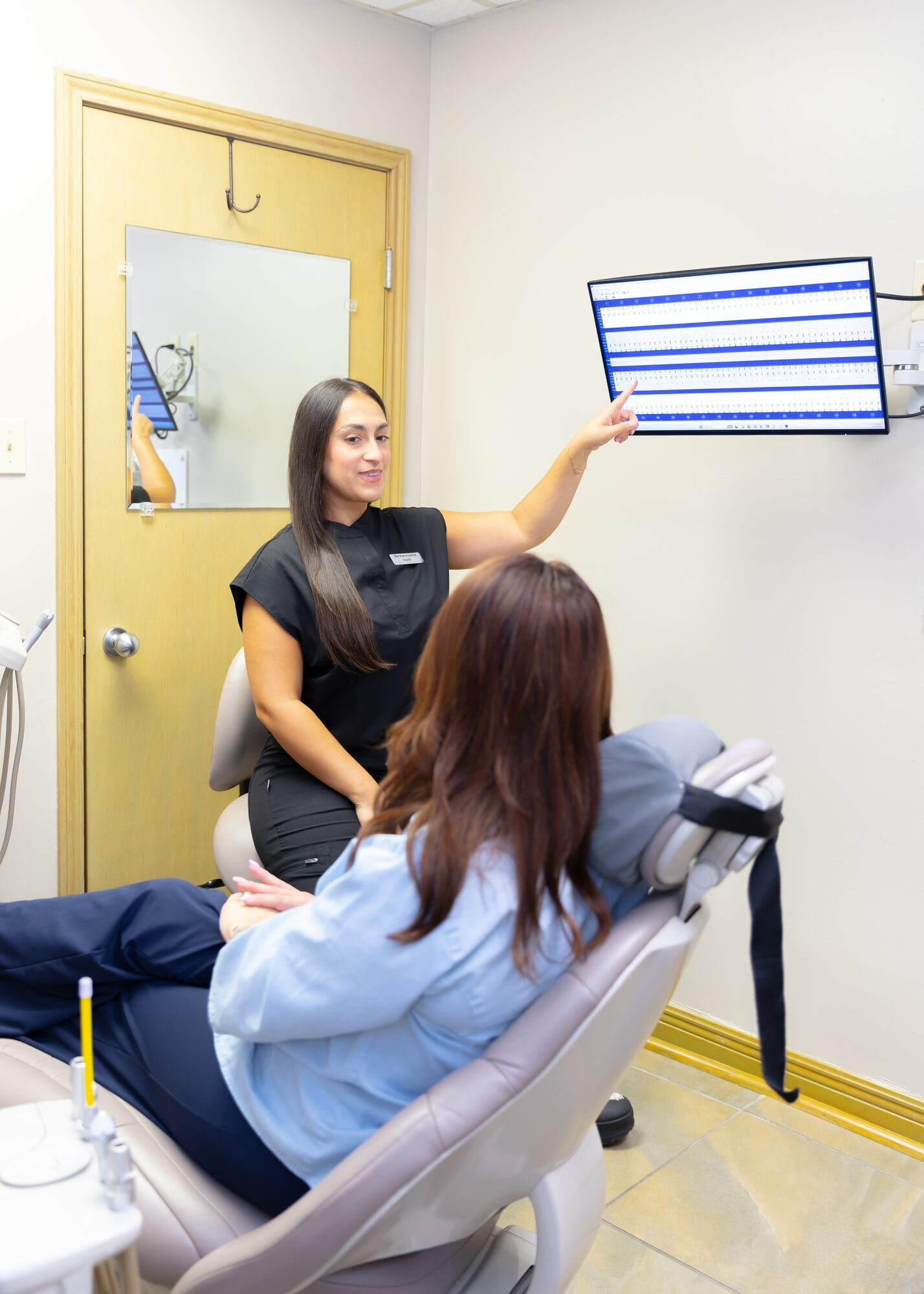
Periodontal therapy is a treatment for an active disease. It addresses infection below the gumline, on root surfaces a routine cleaning doesn’t reach. If we recommend it, it’s because your periodontal exam showed pocket depths, bleeding, or bone loss that a standard cleaning cannot resolve. We’ll walk you through your measurements so you can see the reasoning for yourself.